Ministarstvo Poljoprivrede · Field Record
The Great Bosnian
Spaghetti Harvest
Groves of the Neretva Valley · 1958–1962
The last archived account of the arboreal pasta orchards above Mostar — and of the honey-blight that ended them.
The Groves
For four generations the growers of the Mostar cooperative worked terraces that outsiders mistook for ordinary orchard. In truth each tree carried its harvest in slender strands that lengthened through the dry Herzegovina summer, drawn straight by the still air of the valley. A late frost meant a brittle crop; a windy August meant tangle, and tangle meant a poor grade at market.
Harvest — berba — began when the cicadas stopped. Whole families climbed to the high terraces at first light, drew the strands down by hand, and hung them to cure over the limestone in the sun. The best groves lay directly above the town, where the survey team below took their morning coffee and watched the valley fill with the smell of drying wheat.
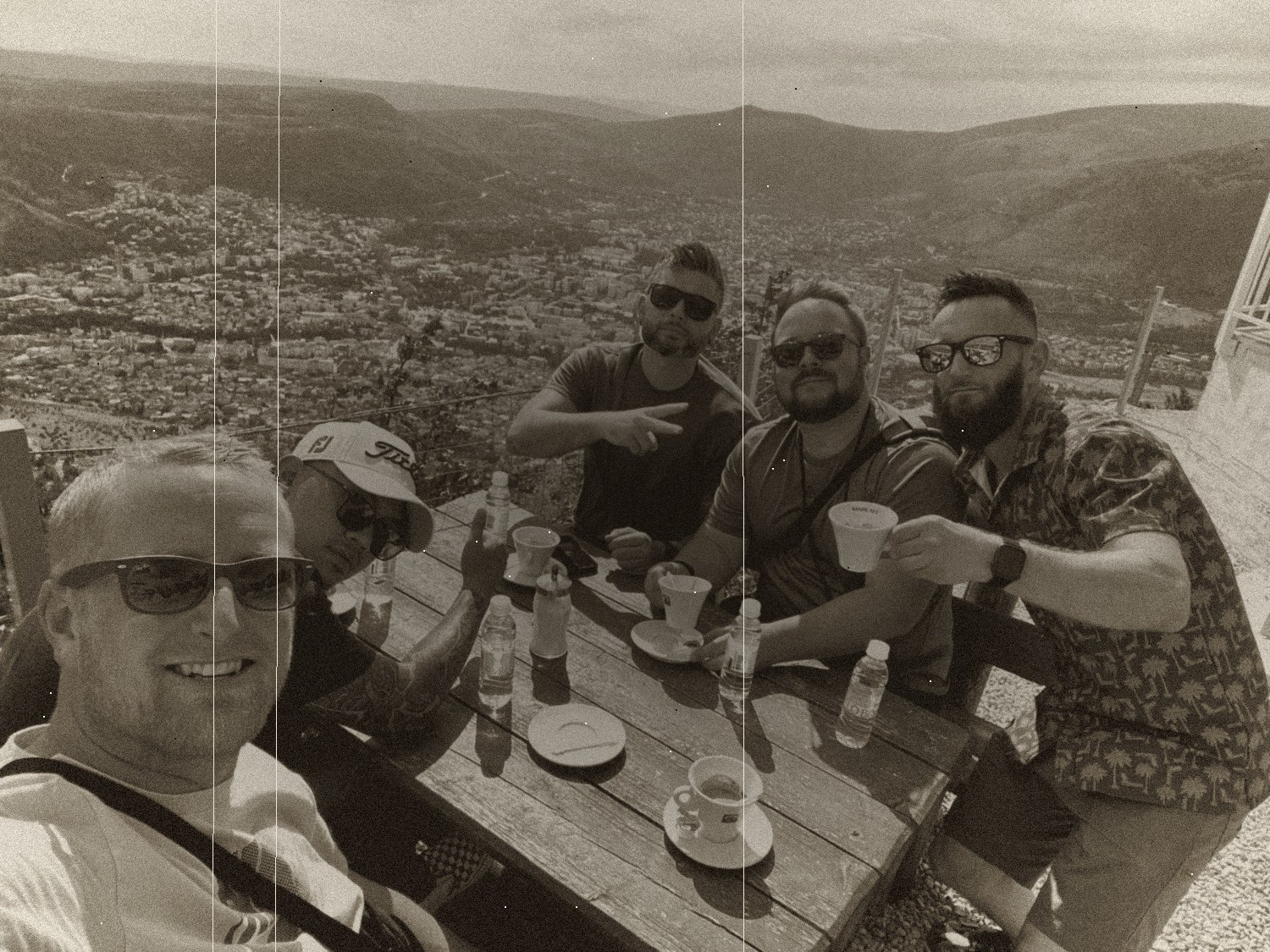
PLATE II. Field survey team at the upper terrace café, above the Neretva. Mostar visible below. Summer harvest. Neg. 477-11
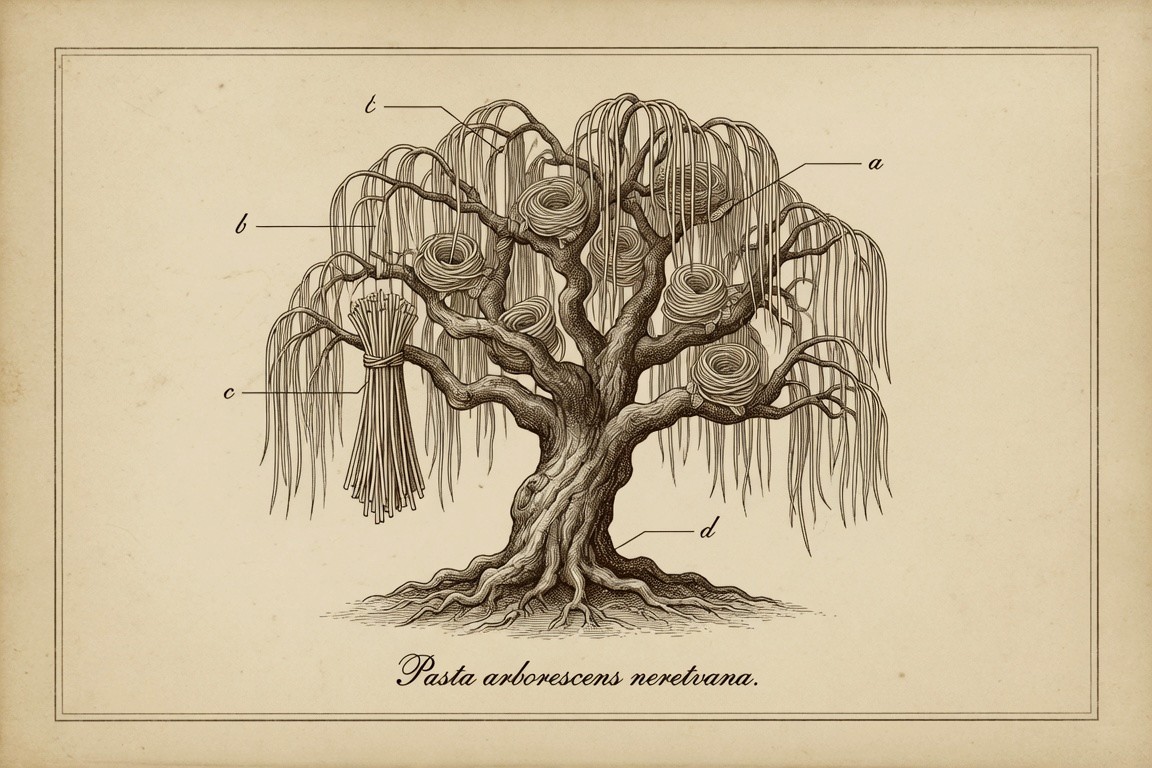
Fig. 1 — Mature specimen in fruit. The coiled fruiting nests (a) ripen among the hanging strand clusters (b); at harvest the strands are drawn down and bound into curing sheaves (c). Note the shallow, spreading terrace root flare (d).
The Harvesters
The cooperative kept few photographs; film was dear and the growers superstitious about the camera during curing. The plate below is the last known portrait of the full company, taken after the final drying of the 1961 crop — the richest anyone could remember, and, though none yet knew it, the last.
At the center, in the bow tie, stands the taster to the cooperative. Each season it fell to him to judge the crop the old way: a single strand drawn raw from the tree and eaten on the spot, unsalted, to gauge the year. He is, by every surviving account, the last person to eat wild Neretva spaghetti before the groves fell — and, the growers would add, the only man who could finish a full sheaf alone.

PLATE I. Growers of the Cooperative after the final drying of the season, 1961. Center, in the bow tie: Benny, taster to the cooperative. Neg. 477-03
The Honey-Blight
It did not begin with the trees. It began in the apiaries at the valley floor, where a gray mildew — later named Fungus mellis, the honey-mold — took hold in the combs during the wet spring of 1962. The honey it touched turned dark and bitter and, the growers swore, restless.
The ants came for that honey as ants always had. But the fungus was already in it, and what the ants carried back to their colonies was not food but fever. Within weeks the placid harvester ants of the terraces had turned frantic — marching in vast disordered columns, climbing anything vertical, stripping bark and strand alike. They went, the last surveyor wrote, for the trees.
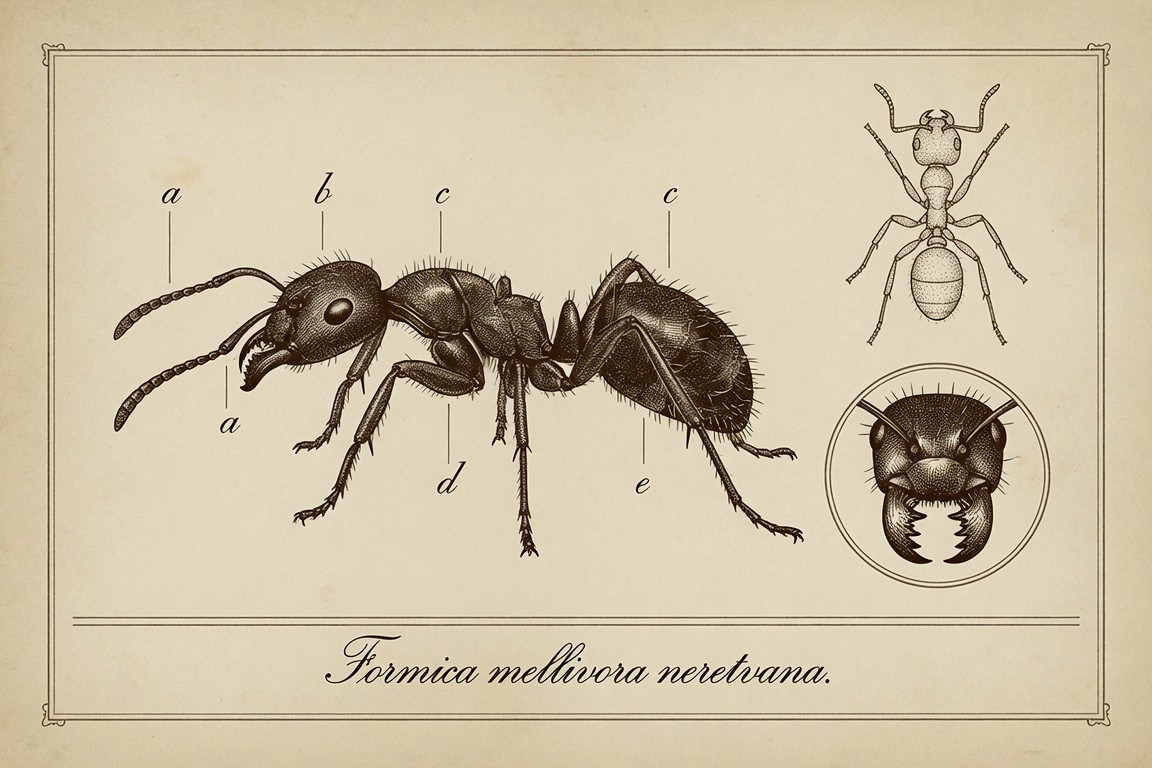
Fig. 2 — Formica mellivora neretvana, the honey-ant of the Neretva terraces, shown in its blighted form. Lateral and dorsal views with a detail of the head and jaws; mandibles, antenna, thorax and gaster marked (a–e). Once a placid harvester of the groves, colonies that fed on the fungus-tainted honey turned frantic — and in that state stripped the terraces of bark and strand alike.
Fig. 3 — Vector of transmission, as reconstructed by the field survey of 1962. From comb to colony to grove: the course of the honey-blight across a single season.
By August the terraces were bare. The strand-clusters were gone, the sheaves eaten in the curing racks, the bark scored to the wood. The trees, denied their crop and their skin two seasons running, did not leaf again. The cooperative dissolved in the spring of 1963. The Institute was quietly folded into the regional ministry the following year, and this file was sealed.
They say the wind above Mostar still smells faintly of drying wheat in August. There is nothing left there now to explain it.